
July 26, 2024 | Daily JAM, Morning Briefing |
The Personal Consumption Expenditures index, the Federal Reserve’s preferred measure of inflation, rose by just 0.% month-over-month in June, the Bureau of Economic Analysis reported this morning. The core personal consumption expenditures price index, which strips out volatile food and energy prices, increased 0.2% from May. The annual rate of core inflation was just 2.6%. Economists had projected a core annual rate of 2.5%. With the Fed set to meet on interest rates on July 31, inflation continues to move lower towards the central bank’s 2% target. These numbers support the Wall Street consensus calling for the Fed to begin cutting interest rates at its September 18 meeting.

July 25, 2024 | Daily JAM, Jubak Picks, LLY, NVO, Stock Alerts, VKTX |
Viking Therapeutic (VKTX) has announced that its subcutaneous obesity drug candidate VK2735 is moving into Phase III development. Viking is currently preparing for an end-of-Phase II meeting with the Food & Drug Administration later this year. Just as significant–maybe more?–pharmacokinetics data for VK2735 continues to show the potential for once-a-month dosing. The market-leading GLP diabetes/weight-loss drugs from Eli Lilly (LLY) and Novo Nordisk (NVO) require weekly injections. That dosing advantage gives VK2735 the potential to be the best-in-class obesity drug. (Viking is also at work on an oral version of the drug.)

July 25, 2024 | Daily JAM, Morning Briefing |
The U.S. economy grew at a stronger than expected 2.8% annualized rate in the second quarter. The growth rate for the quarter that ended in June was double the 1.4% rate in the first quarter. Consumer spending and business investments drove almost all of the second quarter’s growth. But below the top line numbers I can see a slowdown in some fundamental trends from the first quarter.
July 25, 2024 | BYDDF, Daily JAM, Stock Alerts |
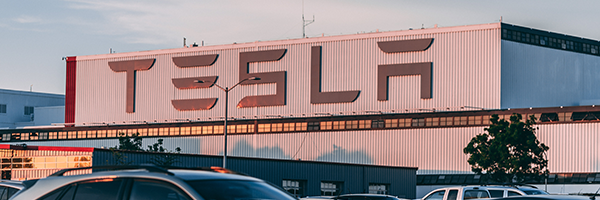
Shares of Tesla (TSLA) fell 12.3% Wednesday July 24, after the company delivered bad financial news in its second quarter earnings report. If you own Tesla or are thinking of buying the shares on this tumble, or indeed you own any stock in the current market, you need to understand the exact nature of Tesla’s troubles.

July 23, 2024 | Daily JAM, Morning Briefing |
On Monday, July 22, the People’s Bank of China lowered its benchmark lending rates and an important short-term policy rate.
The precise timing was a surprise although leaders at the recently concluded third plenum had flagged continuing problems in the real estate sector and soft consumer demand. This is a hugely important change in policy for the People’s Bank, which had recently shied away from cutting rates in an effort to prevent further erosion in the yuan versus the U.S. dollar, and to lower inflation caused by higher prices for imports. The move, I think, signals the hugh level of anxiety in the Beijing leadership at the economy’s refusal to respond to previous stimulus moves.
July 22, 2024 | Daily JAM, Morning Briefing |
Nothing like being at the center of the largest IT “event” in history to send a stock tumblling. Last week CrowdStrike (CRWD), one of the biggest makers of cybersecurity software, pushed out a flawed update that caused an error in the Microsoft Windows operating system that runs millions of computers at point of sales terminals and reservation systems at business such as Starbucks, at airports and airlines, and at banks and financial markets. The file “C-00000291*.sys,” was buried in an update for CrowdStrike’s Falcon sensor product and caused an error in Microsoft Windows operating system. Repairing the damage is expected to take months such much the work has to be done manually. Meanwhile CrowdStrikes shares are in free fall. The shares lost 11% on Friday and dropped another 13.5% today.

July 21, 2024 | AAPL, AMZN, Daily JAM, GOOG, Jubak Picks, MSFT, Top 50 Stocks |
I expect technology sector weakness to continue with earnings worries still unanswered. What could put an end to selling in tech stocks? The NASDAQ 100 is down almost 4% in the last week. Certainly earnings news that showed earnings growth at the companies in this sector robust enough to justify paying a premium for these shares would be a big help Unfortunately, the coming week isn’t going to bring enough earnings good news among tech shares to make this case. Among big tech stocks only Tesla (TSLA) and Alphabet (GOOG) are scheduled to report.
July 18, 2024 | AMAT, ASML, Daily JAM, Jubak Picks, Top 50 Stocks, TSM |
Even good earnings news and guidance from Taiwan Semiconductor Manufacturing (TSM) couldn’t reverse the drop in tech stocks that accelerated yesterday, July 17, when the NASDAQ Composite recorded its worst day since 2022 with a 2.7% decline.

July 18, 2024 | Daily JAM, Morning Briefing |
With the first Federal Reserve interest rate cut likely at the central bank’s September 18 meeting, some current economic data raise the possibility that the economy is slowing more than the Fed–and Wall Street–would desire.

July 16, 2024 | Daily JAM, IWM, Jubak Picks, Morning Briefing, RWM, Stock Alerts, Volatility |
The small-cap Russell 2000 index gained 1.90% yesterday, July 15. That beat the 0.28% gain for the Standard & Poor’s 500. And the 0.53% gain for the Dow Jones Industrial Average. And a 0.27% gain for the NASDAQ 100 index.And today, as of noon, New York time, the Russell 2000 is up another 2.25% versus a gain of just 0.30% for the S&P 500 and 1.21 for the Dow Industrials.The NASDAQ 100 is off o.20% All his continues the outperformance trend of last week that I wrote about in yesterday’s Saturday Night Quarterback post.

July 14, 2024 | Daily JAM, Short Term |
.Watch to see if we finally get that long-awaited, long-predicted, and never quite arriving rotation out of technology stocks (and especially those BIG tech stocks) and into smaller capitalization stocks, or consumer stocks or value stocks.
July 12, 2024 | Daily JAM, Morning Briefing |
The all-items Consumer Price Index (CPI) declined 0.1% In June from May on a seasonally adjusted basis, the Bureau of Labor Statistics reported this morning. The month-to-month CPI inflation rate was unchanged in May.
Over the last 12 months, the all items index increased 3.0% before seasonal adjustment. Economists surveyed by Bloomberg had projected a 3.1% rate. The all-items index rose at a 3.3% annual rate in May. The core index rose at a 3.3% annual rate in June. That was the smallest 12-month increase in that index since April 2021.